


Table of Contents
- What is the skin barrier and why is it crucial
- Symptoms of a damaged skin barrier: how to recognize the problem
- Main causes of barrier function impairment
- The role of niacinamide for the skin and barrier recovery
- Products for skin barrier recovery: what to look for
- Korean cosmetics for sensitive skin: a gentle approach to regeneration
- Diet, stress, and internal hydration: the factors we ignore
- Conclusion: the path to healthy and radiant skin
- Frequently asked questions
Last update: September 20, 2026
What is the skin barrier and why is it crucial
The skin barrier is the uppermost layer of the epidermis, known as the stratum corneum, acting as a protective wall that keeps water in and external aggressors out. When this wall is healthy, the skin looks calm, hydrated, and radiant. When it is compromised, skin barrier recovery begins, which requires time, patience, and the right ingredients.
Understanding this process is key for any woman who wants to achieve the "porcelain skin" effect. In this guide, we will examine how to recognize the problem, what the most common causes are, and what steps to take to restore the skin's natural protection.
According to the American Academy of Dermatology (AAD), a healthy barrier depends on the balance between fatty acids, ceramides, and natural moisturizing factors. When this balance is disrupted, transepidermal water loss occurs, leading to dryness, redness, and flaking.
Symptoms of a damaged skin barrier: how to recognize the problem
Symptoms of a damaged skin barrier include redness, itching, flaking, tightness after washing, and increased sensitivity to products that previously caused no reaction. These signs often appear gradually, rather than suddenly.
Here are the most common signals that the protective function is weakened:
- A feeling of tightness even after applying cream
- Red patches on the cheeks and around the nose
- Flaking that does not disappear after exfoliation
- Itching for no apparent reason
- Increased reactivity to familiar products
- Dull skin that looks exhausted
Many women dismiss these symptoms as temporary irritation and continue using aggressive cleansers. This is a mistake. The longer you ignore the signals, the longer skin barrier recovery will take.
Main causes of barrier function impairment
Impairment of the barrier function is most often the result of a combination of external aggressors and excessive skincare. A single factor is rarely sufficient on its own.
The most common causes include:
- Over-exfoliation with acids or retinoids
- Use of aggressive cleansers that destroy the hydrolipidic film
- Exposure to cold, wind, and polluted air
- Lack of sun protection and accumulation of oxidative stress
- Stress and insufficient sleep, which slow down regeneration
- Hormonal imbalances that affect the lipid layer
According to the UK National Health Service (NHS), frequent washing with hot water and scented products can worsen the condition of sensitive skin. Warm water is much gentler.
The role of niacinamide for the skin and barrier recovery
Niacinamide is a form of vitamin B3 and is one of the few ingredients that simultaneously soothes and strengthens. The role of niacinamide for the skin consists of supporting the synthesis of ceramides, which are the building blocks of the lipid layer.
Clinical observations show that regular use of niacinamide at a concentration between 2% and 5% reduces redness and improves water retention in the stratum corneum. It also helps to even out skin tone and reduce dark spots.
Unlike retinoids and acids, niacinamide does not require an adaptation period. This makes it suitable for sensitive skin and for women who have already gone through a period of irritation.
In Bellaskin products, niacinamide is combined with allantoin, which further soothes and supports regeneration.
Products for skin barrier recovery: what to look for
Products for skin barrier recovery should contain three key groups of ingredients: ceramides, hydrators, and soothing agents. Without them, a routine remains incomplete, even if you avoid aggressive ingredients. The difference between a working formula and a useless one often lies not in the presence of a specific ingredient, but in its concentration, ratio, and method of application.
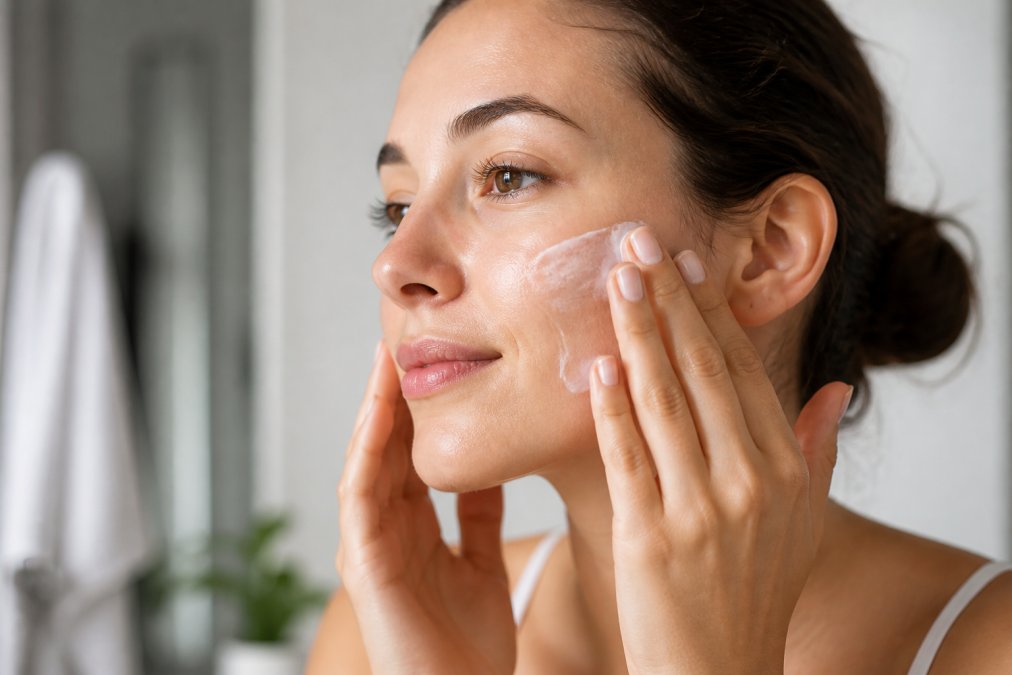
Here is what to look for on the label and why:
| Ingredient | Function | Suitable for | Practical Note |
|---|---|---|---|
| Ceramides (NP, AP, EOP) | Restore the lipid layer | Dry and flaky skin | Look for a combination of at least two types of ceramides, not just one |
| Hyaluronic acid | Retains water in the stratum corneum | All skin types | Low- and high-molecular forms work at different depths |
| Niacinamide | Soothes and strengthens | Sensitive skin | 2-5% is an effective range; over 10% may irritate |
| Panthenol | Reduces redness | Irritated skin | Works synergistically with niacinamide |
| Allantoin | Supports regeneration | Reactive skin | Often combined with panthenol |
| Thermal water | Soothes instantly | All skin types | Useful as a first layer after cleansing |
| Squalane | Restores lipids | Dry and normal skin | Lighter than oils, does not clog pores |
The mechanisms are worth understanding so you don't choose blindly. Ceramides restore the intercellular cement in the stratum corneum. Hyaluronic acid attracts and retains water but needs a sealing layer on top; otherwise, moisture evaporates. Niacinamide stimulates the synthesis of the skin's own ceramides and reduces inflammatory mediators. Panthenol and allantoin act on soothing and regeneration, not directly on hydration.
Avoid products with high alcohol content (especially denatured alcohol at the beginning of the ingredient list), strong fragrances, and aggressive cleansers. These ingredients destroy the hydrolipidic film and delay recovery. The same applies to physical scrubs and products with high percentages of essential oils; they are often perceived as "natural" and safe, but they irritate when the barrier is impaired.
Non-comedogenic formulas are preferred if you are prone to clogged pores. They do not block pores and allow the skin to breathe while it recovers. If you are in a period of active reactivity, choose a formula with fewer ingredients; minimalism reduces the risk of further irritation.
The order of application matters. The classic sequence is: gentle cleansing, hydrating toner or thermal water, niacinamide or hyaluronic acid serum, ceramide cream, and finally, if it is morning, sun protection. If the skin is highly irritated, skip the serum and stick to just cream and sun protection until the reactivity subsides.
According to the European Commission cosmetic products and ingredient database, cosmetic products in the EU are subject to labeling and safety requirements, and an ingredient list is mandatory. This means you can check exactly what you are applying if you take the time to read the label, rather than just the marketing promise on the packaging.
Korean cosmetics for sensitive skin: a gentle approach to regeneration
Korean cosmetics for sensitive skin are built around the idea of multi-layered hydration and gradual recovery, rather than quick results through aggressive active ingredients. This approach is particularly suitable when the skin is already irritated.
The philosophy of Korean skincare includes several principles:
- Cleansing with gentle oils and low-foaming formulas
- Applying several thin layers of hydration instead of one thick one
- Avoiding exfoliation until the barrier is recovered
- Regular use of soothing ingredients such as marigold and astragalus extract
- Mandatory sun protection with a high SPF
Korean formulas often contain plant extracts that reduce inflammation and support regeneration. They are lighter than Western creams and absorb quickly without leaving a heavy film.
Recovering the skin barrier with Korean products requires consistency. Results appear gradually, usually within a few weeks, not overnight.
Diet, stress, and internal hydration: the factors we ignore
Diet and stress affect the skin as much as external care. This is an aspect most guides skip because it's easier to sell a product than to discuss lifestyle. Therefore, here we will look at specific mechanisms, not general wishes.
What specifically helps:
- Drink enough water throughout the day, not just when you are thirsty. Distribute your intake evenly, rather than all at once in the evening.
- Include foods rich in omega-3 fatty acids: oily fish (salmon, mackerel, sardines), walnuts, flaxseed, chia. Omega-3s support the inflammatory balance.
- Get zinc and vitamin C from food; they participate in regeneration and collagen synthesis. Sources: meat, eggs, legumes, citrus fruits, peppers, broccoli.
- Reduce sugar and processed foods, which promote inflammation and collagen glycation.
- Sleep at least 7 hours. During sleep, the skin repairs its barrier more actively, and lack of sleep increases cortisol.
- Set aside time for relaxation, even just 10 minutes a day: breathing, walking, anything that reduces tension.
Conclusion: the path to healthy and radiant skin
Recovering the skin barrier is not a fast process and does not require expensive procedures. It requires patience, the right ingredients, and consistency.
Frequently asked questions
What are the symptoms of a damaged skin barrier?
The main signs include redness, flaking, itching, and a feeling of tightness even after applying cream. The skin may react to products that previously caused no issues. Increased sensitivity to common factors like wind or warm water often occurs as well. If you notice these symptoms, reduce the use of harsh cleansers and exfoliation, and focus on repairing the skin barrier with gentle, moisturizing products.
How long does it take to repair the skin barrier?
The time required depends on the extent of the damage and the care you provide. In mild cases, improvement can be seen within 1-2 weeks with the regular use of repairing products. In more severe cases caused by the prolonged use of harsh ingredients, the process can take 4-6 weeks. It is important to avoid retinoids and acids during this period and focus on hydrating and soothing the skin.
Can niacinamide help repair the skin?
Yes, niacinamide is among the best-researched ingredients for strengthening the skin's protective function. It supports the synthesis of ceramides and the lipid layer, which reduces transepidermal water loss. Furthermore, it regulates inflammation and redness while brightening dark spots. For sensitive skin, it is suitable at a concentration of 2-5%. Combine it with hyaluronic acid and panthenol for optimal hydration and regeneration.
What role does hydration play in the skin's protective function?
Hydration is key because it maintains the hydrolipidic film and prevents transepidermal water loss. When the skin is dehydrated, the stratum corneum thins and the barrier weakens. Drink enough water, avoid overly hot showers, and apply moisturizing products to slightly damp skin. Hyaluronic acid attracts water, while ceramides and panthenol lock in moisture and soothe irritation.