


Table of Contents
- What causes facial redness?
- Step 1: Cleanse with lukewarm water and gentle gels
- Step 2: Reduce inflammation with soothing ingredients
- Step 3: Niacinamide for redness: why it works
- Step 4: Avoid alcohol and fragrances in products
- Step 5: Caring for sensitive skin during winter and summer
- Step 6: Diet, stress, and supplements: how they influence
- Step 7: When to seek a dermatological exam
- Frequently asked questions
Last modified: September 7, 2026
Facial redness is one of the most common cosmetic concerns, yet few people know how to manage it permanently. In this practical guide, we will show you how to soothe facial redness with 7 concrete steps that address not just the symptom, but its root cause. The key is understanding that redness is not just an aesthetic flaw, but a signal of a compromised skin barrier and blood vessel reactivity. Below, you will discover what truly works, which ingredients to look for, and how to build a routine that restores skin calm.
What causes facial redness?
Facial redness is the visible result of vasodilation, a process in which blood vessels beneath the skin's surface expand, allowing more blood to reach the tissues. This can be a short-term response to heat, emotion, or alcohol, but when it becomes chronic, it usually indicates reactive skin with weakened barrier function. The skin loses its ability to protect itself, and any external irritant, from wind to aggressive cosmetics, triggers inflammation and erythema.
Reactive skin or rosacea: how to tell the difference?
Reactive skin is a condition where the skin overreacts to irritants with burning, itching, and redness, but usually recovers once the irritant is removed. Rosacea is a chronic inflammatory disease that often involves persistent erythema, visible enlarged capillaries, and sometimes papules, with symptoms that can worsen over time (peer-reviewed research). If your redness is a constant companion rather than just a reaction to a specific trigger, it is worth seeking a dermatologist's opinion, as rosacea requires a more specialized approach. This distinction is crucial as it determines whether you are treating a symptom or a chronic disease.
Step 1: Cleanse with lukewarm water and gentle gels
The first mistake most people with reactive skin make is cleansing their face with hot water and aggressive foams that dry out the barrier. Warm water further dilates blood vessels, while the detergents in strong cleansers strip away natural lipids, leaving the skin defenseless. The correct approach involves washing only with lukewarm water and choosing a cleansing gel with a pH close to the skin's natural balance that doesn't leave a feeling of tightness.
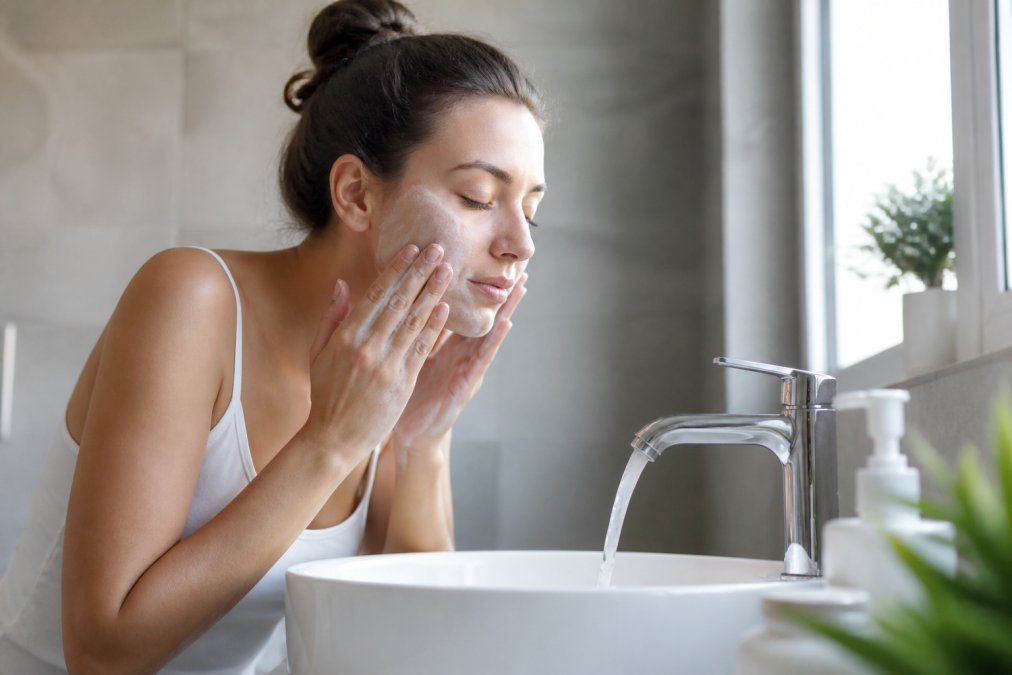
It is crucial to avoid exfoliants with harsh particles and face brushes that mechanically irritate the skin. Cleansing should not last more than 60 seconds, and drying should be done by blotting with a soft towel, not rubbing. After washing, the skin should not "squeak" with cleanliness, as this is a sure sign that the barrier has been compromised.
Step 2: Reduce inflammation with soothing ingredients
When redness has already flared up, the goal is not just to apply another product, but to act quickly and specifically. Here is how to get the most out of soothing ingredients without overloading the skin.
The emergency protocol: cooling before treatment
The first step for sudden redness is not a serum, but lowering the local temperature. When the skin is hot to the touch, blood vessels are maximally dilated, and active ingredients absorb faster but with more risk. Apply a cool compress, a clean cotton cloth soaked in room-temperature water, for 3-5 minutes. Avoid direct ice, as sudden vasoconstriction followed by rapid expansion can worsen the reaction. Once the skin is cooled, it is more receptive and less reactive.
How to apply soothing ingredients correctly
- Panthenol (provitamin B5): Look for creams with a concentration of around 5%. Apply a thin layer over affected areas without rubbing; light tapping motions with fingertips reduce mechanical irritation. Let the product absorb for at least 2 minutes before applying the next layer.
- Niacinamide: If your skin is highly reactive, start with a 2% concentration, not 10%. Higher doses with a compromised barrier can cause redness and burning. Apply niacinamide only to dry, cooled skin to minimize the risk of transepidermal water loss.
- Allantoin and bisabolol: These ingredients work best in combination with a moisturizer containing ceramides. Allantoin helps heal micro-damage, and bisabolol, extracted from chamomile, reduces the feeling of burning. Look for products that list them in the first half of the ingredient list.
Thermal water as a tool, not a substitute
Thermal water spray is excellent for quick cooling throughout the day, but do not use it as your only hydration. When water evaporates from the skin's surface, it can draw out natural moisture, deepening dehydration. Spray thermal water, let it sit for 10-15 seconds, and then blot the excess with a soft towel without rubbing. If you are outdoors and don't have a towel, apply a light moisturizer over the still-damp skin to "seal in" the hydration.
When to stop using a product
If a soothing product causes burning or a feeling of heat within the first 5 minutes of application, it is a sign that the formula is not suitable for your skin at the moment. Do not continue using it in the hope that the skin will "get used to it." Instead, take a 48-hour break, during which you use only water and a minimal moisturizer without active ingredients. Then, test the product on a small area behind the ear for 24 hours before returning it to your routine.
:::tip Practical tip
Keep a cool compress in the fridge during summer, but never apply it directly to frozen skin. Wrap it in a thin cotton cloth to protect the capillaries from temperature shock.
Step 3: Niacinamide for redness: why it works
Niacinamide, a form of vitamin B3, has established itself as one of the most effective ingredients for reducing redness because it works on several levels simultaneously. It supports ceramide synthesis, thereby strengthening the skin barrier, and has anti-inflammatory properties that directly reduce erythema. Studies show that regular use of niacinamide in concentrations between 2% and 5% improves overall skin tone and reduces redness associated with acne and reactivity (PubMed).
When choosing a niacinamide serum, pay attention to the concentration, as excessively high doses can themselves cause redness in sensitive individuals. A formula that combines niacinamide with soothing agents like allantoin and botanical extracts offers a more balanced approach for caring for sensitive skin. Include niacinamide in your morning routine, before your moisturizer, waiting 2-3 minutes for the serum to absorb.
Step 4: Avoid alcohol and fragrances in products
One of the most common causes of persistent redness is the daily use of cosmetics containing denatured alcohol and synthetic fragrances. Alcohol in cosmetics acts as a solvent that destroys the skin's lipid layer, and fragrances are among the most common allergens, capable of triggering contact dermatitis. If the product label contains "parfum" or "alcohol denat." among the first five ingredients, it is likely worsening your condition.
Look for products labeled as hypoallergenic and fragrance-free, but don't stop at the label; check the full ingredient list. Essential oils, while natural, can also be irritating to reactive skin, especially those with high limonene or linalool content. Switch to products with non-comedogenic formulas that do not clog pores and reduce the risk of inflammation.
Step 5: Caring for sensitive skin during winter and summer
Temperature fluctuations are one of the most underestimated triggers for redness, as the transition from cold air to a warm room causes rapid vasodilation. During winter, the skin needs richer moisturizing creams with ceramides and squalane, which create a protective film against the cold wind. In summer, on the other hand, sun protection with SPF 30 or higher becomes mandatory, as ultraviolet rays deepen inflammation and dilate capillaries (the FDA).
But seasonal care doesn't end with choosing a cream. When redness is visible and you have an important meeting or event, makeup can be your best ally, provided you apply it correctly without further irritating the skin. This is a topic most dermatological articles overlook, but it is crucial for daily self-confidence.
Color correction: why green concealer works
Redness is visually neutralized by the color green, which is its complementary color on the color wheel. Green concealer does not heal the skin but creates a neutral base upon which foundation can build an even tone. The key is the texture: choose a concealer with a creamy, not liquid, consistency that contains no alcohol or fragrances. Apply it only to areas with visible redness, usually around the nose, cheeks, and chin, using light tapping motions with a finger or a soft sponge.
How to choose a foundation that doesn't worsen the condition
Look for a foundation with a mineral base or one marked as suitable for sensitive skin. Mineral powders with zinc oxide offer light sun protection and have a soothing effect but can highlight flaking if the skin is dehydrated. Liquid formulas with hyaluronic acid and ceramides are a better choice for dry, reactive skin. Avoid products high in silicones, which can clog pores and trap heat, potentially worsening redness.
Practical routine for concealing without irritation
- Preparation: Apply a soothing moisturizer and wait 5 minutes until it is fully absorbed. Never apply makeup to wet or sticky skin.
- Green concealer: Apply a thin layer only on red areas. A thicker layer does not mean better coverage, but a higher risk of cracking and irritation.
- Foundation: Choose a light-to-medium coverage foundation and apply it with a damp sponge, using tapping, not rubbing, motions. Rubbing stimulates blood circulation and can worsen redness.
- Setting: If you use powder, choose a translucent mineral powder and apply it only to the T-zone to avoid further drying out the cheeks.
- Removal: At the end of the day, use micellar water for sensitive skin, fragrance-free, and rinse with lukewarm water. Do not rub with wipes, as mechanical friction is among the most common causes of worsening reactivity.
Seasonal makeup adjustments
In winter, when heating dries out the air, avoid matte foundations that highlight dry patches. Choose a satin finish that reflects light and creates the illusion of healthier skin. In summer, opt for waterproof formulas, but remove them carefully with a bi-phase cleanser that doesn't require aggressive rubbing. Always carry a thermal water spray to refresh your makeup and cool the skin without touching it.
:::warning Important warning
If the redness is accompanied by pus-filled pimples, severe burning, or flaking, do not mask the symptoms with makeup. In these cases, cosmetics can deepen inflammation, and visible improvement is temporary. Seek a dermatological exam before experimenting with corrective products.
Step 6: Diet, stress, and supplements: how they influence
Inflammation on the face is often a mirror of the body's internal state, not just a result of external factors. Foods with a high glycemic index, as well as alcohol and spicy dishes, are well-known triggers for redness because they stimulate blood circulation and inflammatory processes. The psychological aspect is just as important, as stress increases cortisol levels, which in turn can worsen the skin's condition.
Practicing relaxation techniques, such as deep breathing or meditation, can have a measurable effect on the frequency and intensity of redness. Certain supplements, such as omega-3 fatty acids and green tea extract, show potential to reduce inflammation from within, but always consult a doctor before starting a new regimen. Keep a food and drink diary to identify your personal triggers, as they vary significantly from person to person.
| Trigger | How it works | What to do |
|---|---|---|
| Spicy foods | Dilate blood vessels | Limit them and observe the reaction |
| Alcohol | Increases blood circulation in the skin | Replace with lukewarm water or herbal tea |
| Chronic stress | Increases cortisol and inflammation | Practice breathing or meditation |
| Sudden temperature change | Triggers vasodilation | Avoid sudden cold-to-hot transitions |
Step 7: When to seek a dermatological consultation
If facial redness persists for more than a few weeks despite gentle care, or is accompanied by pain, flaking, or pustules, you should definitely seek a dermatological examination. A specialist can provide an accurate diagnosis, distinguishing simple reactivity from rosacea or other dermatoses that require medical treatment. Self-diagnosis and experimenting with more and more products often worsen the condition because it further weakens the skin barrier.
During the examination, do not hesitate to ask questions about ingredients to avoid and the long-term strategy for managing symptoms. A dermatologist may also recommend procedures such as laser therapy for permanently dilated capillaries, but these should always be considered after exhausting conservative approaches. Early intervention is key, as chronic inflammation can lead to permanent changes in skin texture and color.
At Bellaskin, we believe that calming redness starts with the right ingredients and patience, not with a more aggressive routine. Our formulas, developed with niacinamide and allantoin, are designed to support barrier function and reduce visible inflammation without irritating sensitive skin. If you are looking for products that combine clinically proven efficacy with soothing botanical extracts, explore the Bellaskin range and discover how to restore a calm, even complexion.
Dealing with facial redness requires consistency, the right product choices, and an understanding of your individual triggers. The seven steps we have outlined offer a roadmap from gentle cleansing to a timely dermatological consultation. Start with the basics, be patient, and do not hesitate to trust Bellaskin for care that restores the skin's natural balance. Shop now.
Frequently asked questions
What are the main causes of facial redness?
Facial redness is caused by dilated blood vessels, a condition known as vasodilation. The main triggers are temperature fluctuations, hot drinks, spicy foods, stress, and unsuitable cosmetics containing alcohol or fragrances. For some people, redness is a symptom of reactive skin, while for others, it is a sign of rosacea. If the redness is constant and accompanied by visible dilated capillaries, a dermatological examination will confirm the exact cause and guide treatment.
How long does it take to calm irritated skin?
Mild redness from an unsuitable product can subside within 24 to 48 hours if you stop using it and apply soothing ingredients like panthenol or niacinamide. Restoring a damaged skin barrier in reactive skin takes between 2 and 4 weeks of regular care with ceramides and hyaluronic acid. With rosacea, the process is slower and requires consistency in your routine and possibly medications prescribed by a dermatologist. Do not expect an instant effect from the first application.
Can niacinamide worsen redness in sensitive skin?
Niacinamide is well-tolerated by most people, but concentration matters. Products with 10% niacinamide can cause redness and stinging in reactive skin. To reduce facial inflammation, choose serums with a concentration between 2% and 5% and test the product on a small area behind the ear for 48 hours. Niacinamide strengthens the skin barrier and reduces redness, but only when the formula also contains soothing ingredients like allantoin or calendula extract.
Which foods can trigger skin redness?
Spicy foods, alcohol, and hot drinks are the most common dietary triggers. Hot spices contain capsaicin, which dilates blood vessels in the skin. Alcohol, especially red wine, also leads to vasodilation. If you notice redness after certain meals, keep a food diary for two weeks. Histamine in aged cheeses, fermented products, and some nuts can also be a cause. Eliminate suspected foods one by one to identify the exact culprit.