


Table of Contents
- Why skin tone becomes uneven: causes and types of pigmentation
- Korean skincare for pigmentation: why the formulas work
- Niacinamide skin benefits: how it evens out tone and strengthens the barrier
- How to remove dark spots on the face: step by step
- Products for evening out skin tone: how to choose according to skin type
- Radiant skin routine: morning and evening for an even tone
- Diet, stress, and sleep: how they affect pigmentation
- Conclusion: realistic expectations and consistency
- Frequently asked questions
Last update: September 29, 2026
Why skin tone becomes uneven: causes and types of pigmentation
Uneven skin tone is the result of excessive melanin production in specific areas of the skin. This process is called hyperpigmentation and affects millions of women worldwide.
When looking for products to even out skin tone, we must first understand what causes dark spots. There are several common causes.
- Sun exposure - UV rays stimulate melanocytes
- Hormonal changes - pregnancy, contraceptives, menopause
- Inflammation and acne - post-acne marks and redness
- Photoaging - accumulation of damage over the years
Types of pigmentation include sun spots, melasma, and post-inflammatory hyperpigmentation. Each requires a different approach.
Korean skincare for pigmentation: why the formulas work
Korean skincare for pigmentation is distinguished by lightweight textures and combinations of active ingredients in a single formula. This approach allows for simultaneous brightening and soothing of the skin.
Asian formulas often combine vitamin C, niacinamide, and plant extracts. They work on several levels against dark spots.
According to a review of dermatological studies, combination formulas yield better results than single-ingredient products.
Key ingredients in Korean formulas against dark spots
The most effective ingredients in Korean pigmentation skincare include:
- Niacinamide - blocks melanin transfer
- Vitamin C - antioxidant and brightening agent
- Allantoin - soothes the skin barrier
- Plant extracts - calendula, astragalus, rice
These ingredients work synergistically. The result is an even tone and a natural glow.
Niacinamide skin benefits: how it evens out tone and strengthens the barrier
The skin benefits of niacinamide are among the best-researched in dermatological care. This form of vitamin B3 (nicotinamide) works simultaneously on pigmentation and the skin's protective function—a combination few other active ingredients offer.
How exactly it works against dark spots
Niacinamide does not brighten the skin directly. It blocks the transfer of melanin from melanocytes (the cells that produce it) to keratinocytes (surface cells). The result is that the already formed melanin remains deeper and does not appear as a dark spot on the surface.
This is a different mechanism from that of vitamin C, which inhibits the enzyme tyrosinase and reduces the production of new melanin. That is why the two ingredients complement each other rather than compete.
Concentrations and realistic expectations
In dermatological practice, concentrations between 2% and 5% are most commonly used. Higher percentages do not provide proportionally better results and can cause redness in sensitive skin.
- 2-3%, suitable for daily use on sensitive skin and for maintenance
- 4-5%, the standard for visible hyperpigmentation and enlarged pores
- above 5%, rarely provides additional benefit and increases the risk of irritation
Visible lightening of spots is usually noticed after 8-12 weeks of regular use. This is the realistic timeframe most practitioners cite, not days.
Strengthening the skin barrier
The second major benefit is the strengthening of the lipid barrier. Niacinamide stimulates the synthesis of ceramides, the fatty molecules that retain water in the skin and protect it from external irritants. This is why it is suitable for acne-prone skin as well as skin recovering from dermatological procedures.
Additionally, niacinamide regulates sebum secretion, making it useful for oily and combination skin without drying it out, as many brightening ingredients do.
What to combine it with
Niacinamide pairs well with vitamin C, hyaluronic acid, zinc, and allantoin. The only practical limitation is that for very sensitive skin, combinations with high concentrations of pure ascorbic acid can be irritating, so it is wise to apply them at different times of the day.
How to remove dark spots on the face: step by step
Removing spots on the face requires consistency and a proper routine. Here are the steps that work.
- Cleanse your face with a gentle gel
- Apply an exfoliating product 2-3 times a week
- Use a serum with active ingredients every day
- Moisturize with a suitable cream
- Apply sun protection every morning
The Peel Shot White Rice Peeling Ampoule by Bellaskin is suitable for step two. It removes blackheads and unclogs pores without causing redness. The price is BGN 29.99.
Sun protection: a mandatory step against photoaging
Sun protection is the most important step in pigmentation care. Without it, all efforts are in vain.
According to the World Health Organization, UV radiation is a primary factor in photoaging and dark spots.
Choose a product with a high sun protection factor. Apply it even on cloudy days.
Peel Shot White Rice Peeling Ampoule →
Products for evening out skin tone: how to choose according to skin type
Products for evening out skin tone must match your skin type. A mistake here is the most common cause of disappointment; an active ingredient that works for one skin type might cause redness or clog pores in another.
The choice is made along two axes: texture (serum, lotion, cream) and active ingredients. Here is how it looks for each type.
Dry skin
With dry skin, the barrier is weakened, so brightening actives must be accompanied by hydration.
- Texture: richer serum or cream, not a watery lotion
- Active ingredients: niacinamide, hyaluronic acid, glycerin, allantoin
- Avoid: high concentrations of pure ascorbic acid and alcohol at the beginning of the ingredient list
Oily skin
For oily skin, the goal is brightening without clogging pores.
- Texture: lightweight serum or gel, no heavy oils
- Active ingredients: niacinamide (regulates sebum), low percentages of salicylic acid, vitamin C in a stable derivative form
- Avoid: occlusive creams and coconut oil at the beginning of the ingredient list
Sensitive skin
Patience is more important here than the strength of the active.
- Texture: gentle fragrance-free serum
- Active ingredients: allantoin, niacinamide in low concentration, soothing plant extracts (calendula, oats, rice)
- Avoid: introducing several new actives simultaneously
Combination skin
Different zones require a different approach; this is not a disadvantage, but a plan.
- T-zone (forehead, nose, chin): lightweight niacinamide serum
- Cheeks: richer cream with hydrating ingredients
- Active ingredients: combination of niacinamide and vitamin C, applied at different times
Quick test: what is your skin type and what to look for
Answer these questions to determine your skin type:
- Do you feel tightness after washing? → Dry skin
- Does your face shine after two hours? → Oily skin
- Does it get red easily? → Sensitive skin
- Do different areas behave differently? → Combination skin
What to look for on the label
Besides skin type, there are three practical checks before purchasing:
- The active should be at the beginning of the ingredient list; if niacinamide is after the fragrance, the concentration is symbolic.
- The packaging should protect the active; vitamin C degrades with light and air, so dark glass or a pump are preferable to a jar.
- Include sun protection in your routine; without SPF, even the best brightening product loses its purpose.
Radiant skin routine: morning and evening for an even tone
A routine for radiant skin has two parts. The morning protects, the evening restores.
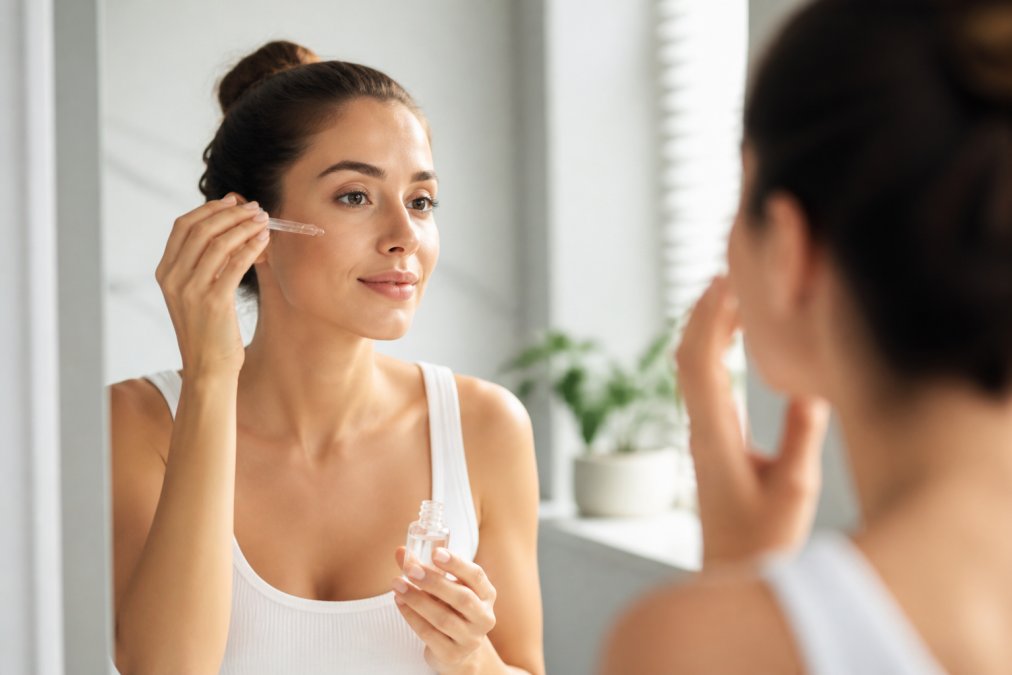
Morning:
- Gentle cleansing
- Vitamin C serum
- Moisturizing cream
- Sun protection
Evening:
- Double cleansing
- Exfoliation (2-3 times a week)
- Niacinamide serum
- Nourishing cream
Diet, stress, and sleep: how they affect pigmentation
Lifestyle directly affects pigmentation. This is an aspect most guides overlook.
Chronic stress increases cortisol. This can increase melanin production.
- Antioxidants in food - fruits, vegetables, green tea
- Adequate sleep - 7-8 hours for cellular renewal
- Hydration - water for elasticity and a radiant tone
- Stress management - yoga, meditation, walks
The psychological aspect also matters. Many women experience discomfort from dark spots, which affects self-esteem.
Conclusion: realistic expectations and consistency
Evening out skin tone takes time. Most dermatologists recommend at least 8-12 weeks of regular care before seeing visible results.
Consistency is key. Sporadic use of active ingredients does not yield results.
Evening out skin tone requires patience and the right products. Bellaskin offers solutions with Korean formulas, niacinamide, and allantoin for visible results. The Peel Shot Peeling Ampoule removes blackheads and unclogs pores without redness. Over 4,000 satisfied customers have chosen Bellaskin with a 4.9/5 rating. Start with Bellaskin and achieve a radiant, even tone.
Frequently asked questions
Which ingredients help best with evening out skin tone?
The best-researched ingredients for evening out skin tone are niacinamide, vitamin C, retinol, and exfoliating acids. Niacinamide reduces melanin production and strengthens the skin barrier, while vitamin C acts as an antioxidant and brightens dark spots. Retinol accelerates cellular renewal and fades post-acne marks. For sensitive skin, the combination of niacinamide and allantoin soothes and evens tone without redness.
How long does it take to even out skin tone with cosmetic products?
The first visible results usually appear after 4 to 8 weeks of regular use. Hydration and natural radiance improve within the first few days, while the fading of dark spots and post-acne marks requires consistency for at least 2 to 3 months. Factors such as age, skin type, and routine consistency influence the speed of results. Sun protection is mandatory to prevent the spots from returning.
Can niacinamide help with uneven skin tone?
Yes, niacinamide is one of the most effective ingredients for uneven skin tone. It reduces the transfer of melanin to the surface of the skin, which brightens dark spots and post-acne marks. It also strengthens the skin barrier and reduces redness, making the complexion more even. Use a serum or cream with niacinamide morning and evening, starting with a lower concentration if you have sensitive skin.
Do I need to use sun protection when using products to even out skin tone?
It is mandatory. Without high SPF sun protection, all efforts with skin-evening products are futile because UV rays stimulate melanin production and bring back dark spots. Apply sunscreen with SPF 30 or higher every morning, even on cloudy days and during the winter. If you are using retinol or exfoliating acids, sun protection is even more important, as the skin becomes more sensitive.